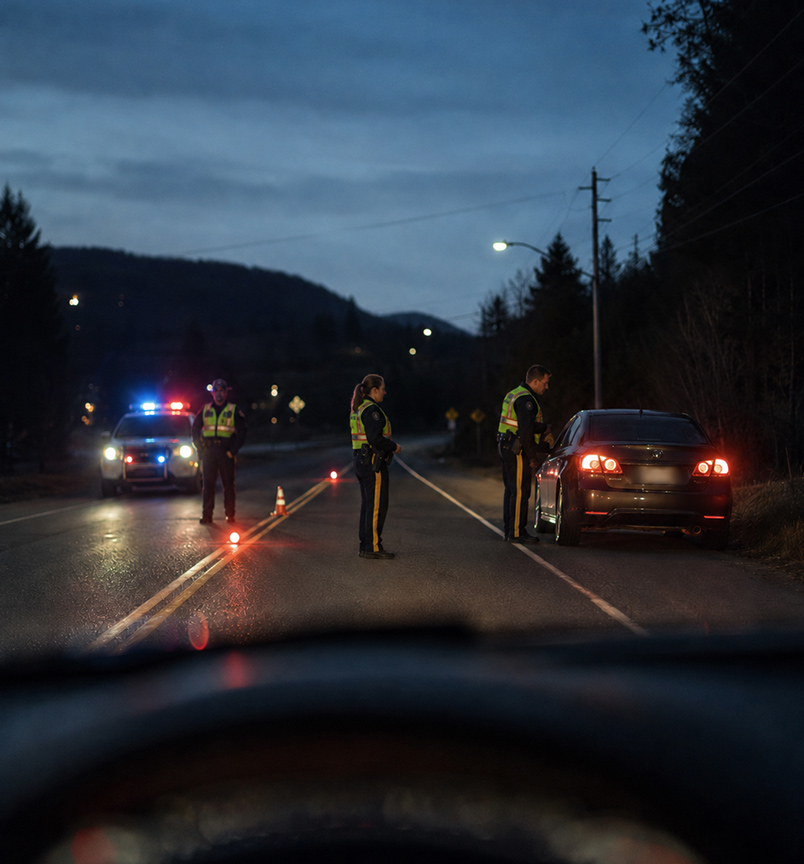
Impaired and dangerous driving cases can turn on roadside procedure, police observations, testing, and how the evidence was obtained.
Roadside Investigations Move Quickly
Impaired driving and dangerous driving charges often begin with a roadside stop, collision, 911 call, or police observation made in a matter of minutes. Those early decisions can shape the entire case, including demands for testing, statements made at the scene, and the evidence collected afterward.
The consequences can include a criminal record, driving prohibitions, vehicle impoundment, insurance problems, and jail in more serious cases. Even where the investigation moved quickly, the Crown still has to prove the charge and the police must have acted within their lawful authority.

The Evidence Needs to Be Tested
These cases can depend on breath or blood samples, driving evidence, witness observations, statements, roadside testing, or the circumstances surrounding a collision. Questions may also arise about the legality of the stop, the grounds for detention, the timing of demands, and whether Charter rights were respected.
Problems with procedure or evidence can materially affect the strength of the prosecution. A case that appears straightforward at first may look very different once the sequence of events and the admissibility of the evidence are examined carefully.
The Right Strategy Depends on the File
Not every impaired or dangerous driving case should be approached the same way. Some matters call for Charter challenges or a trial focused on the reliability and admissibility of the evidence. Others may be better addressed through negotiation where the circumstances and available resolution justify it.
Jensen Law reviews the driving evidence, police conduct, testing process, witness accounts, and surrounding circumstances before recommending a strategy. The focus is on the issues that actually matter in the case and the outcome that can realistically be pursued.